Workbench Wednesday

Frank Hodina shares some news from his workbench.

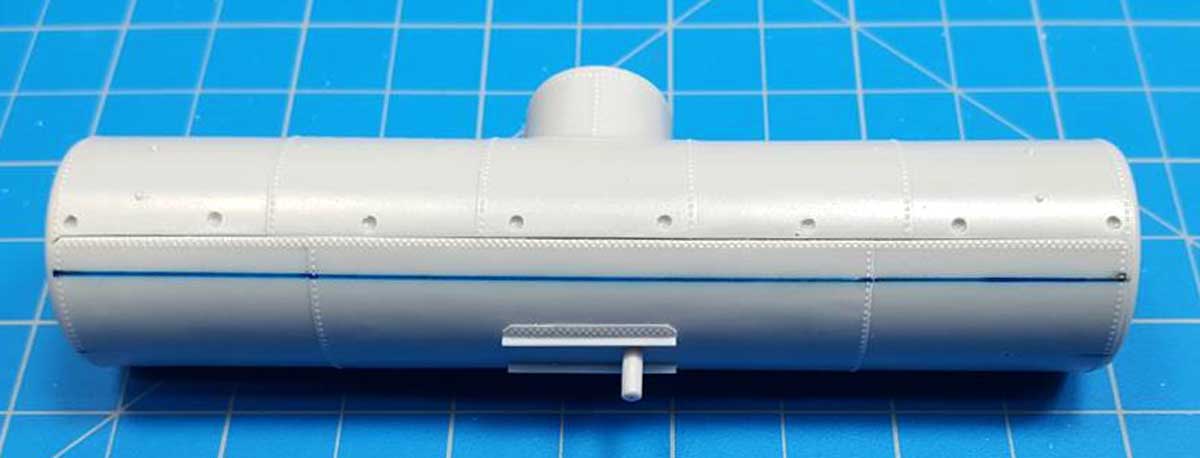
This isn’t a typical Workbench Wednesday post, but more of a kit update. Recently I was assembling the parts for the new Resin Car Works UTLX 10K Class X tank car kit. In building the car I found I had screwed the pattern up splendidly! In the above image, the blue line on the tank indicates where the joint between the upper and lower sections is supposed to be. I used a common plastic tank as the base for the pattern and I never checked the bottom course width with the drawing.
Continue reading Workbench Wednesday

Owl Mountain Models SP flat car kit

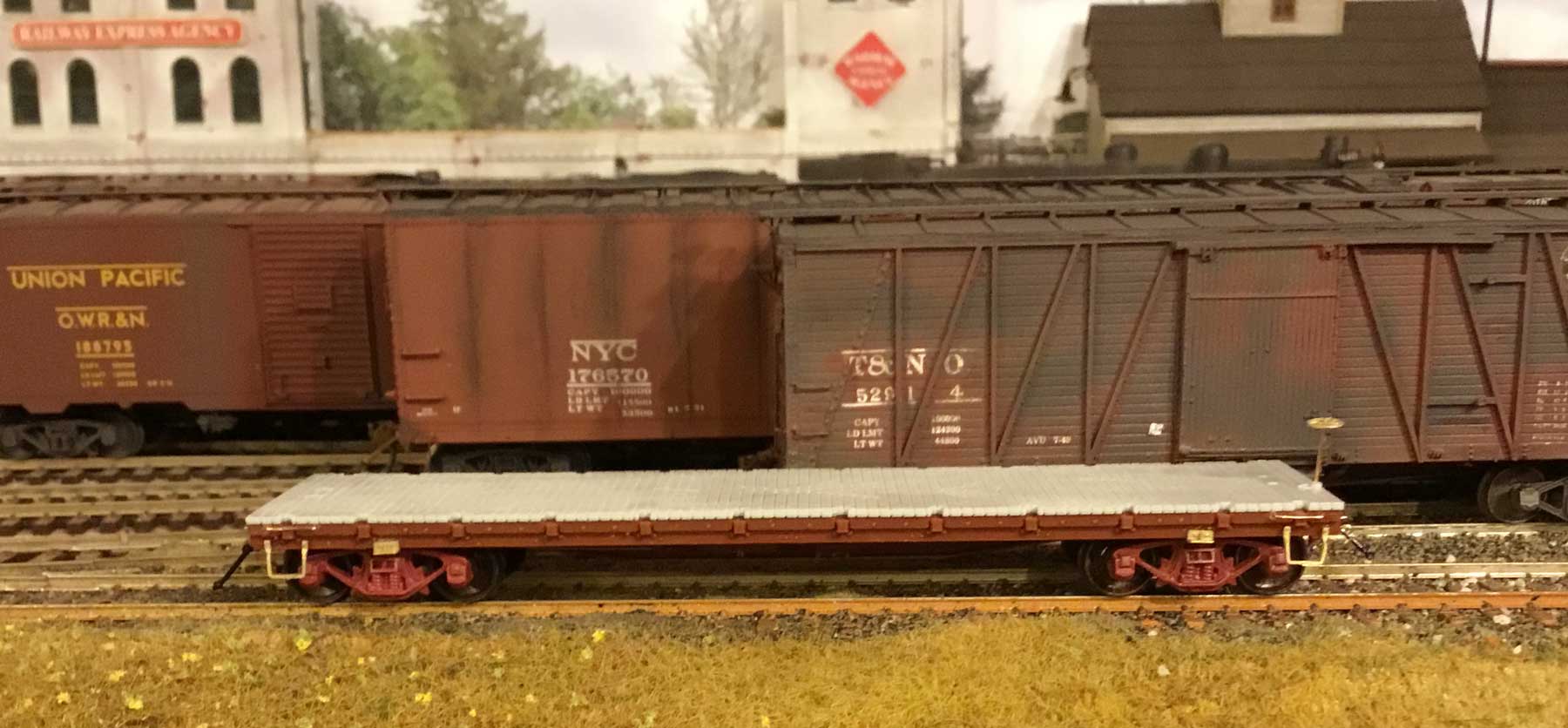
Paul Doggett sent a message recently from his home in the UK. He detailed his build of the new HO scale Southern Pacific flat car kit. Here’s Paul with notes and photos.

This is not an easy one to write as the Owl Mountain Models F-50-10 flat car kit is such a good kit to build. The model parts came together easily and assembly took about four to five hours.

Continue reading Owl Mountain Models SP flat car kit

Adapting Kadee brake components

Bill Welch has adapted the HO scale Kadee brake gear and brake wheel detail parts to use in updating other models. Here’s Bill with his techniques.

I have known for awhile now that Kadee sells their assembled brake gear and wheel part direct to consumers. A phone call was recently placed to Sam Clark at Kadee and I ordered a variety of their parts even though I was not sure how I would attach them to models. I know Detail Associates offers brake wheel and gears but they are getting hard to find and they are not a finely rendered as the Kadee parts.

Continue reading Adapting Kadee brake components

Layout Design with Nelson Moyer, part 7

Warning – Low Clearance Ahead

Nelson Moyer returns with build tips and techniques for duckunders. Click on any image here to review a larger size. Here’s Nelson with his latest tale.

Burlington Yard and Winfield Duckunder

Duckunders are to be avoided. That’s a cardinal rule of layout design. However, there are circumstances where duckunder alternatives are impossible, and my track plan presented me with no choice if I was going to model even a severely truncated facsimile of the CB&Q yard at Burlington, IA. By referring to the track plan in Part 1 of the series, it is immediately evident that the longest unbroken spaces in my basement are on the North and South outside walls, and those walls measure 16- and 18-feet, respectively. That’s not nearly long enough for Burlington, and the placement of those walls is totally wrong for a geographical approximation of the prototype.

Continue reading Layout Design with Nelson Moyer, part 7