All posts by RCWadmin

How to Determine Rung Spacing When Scratch Building Ladders


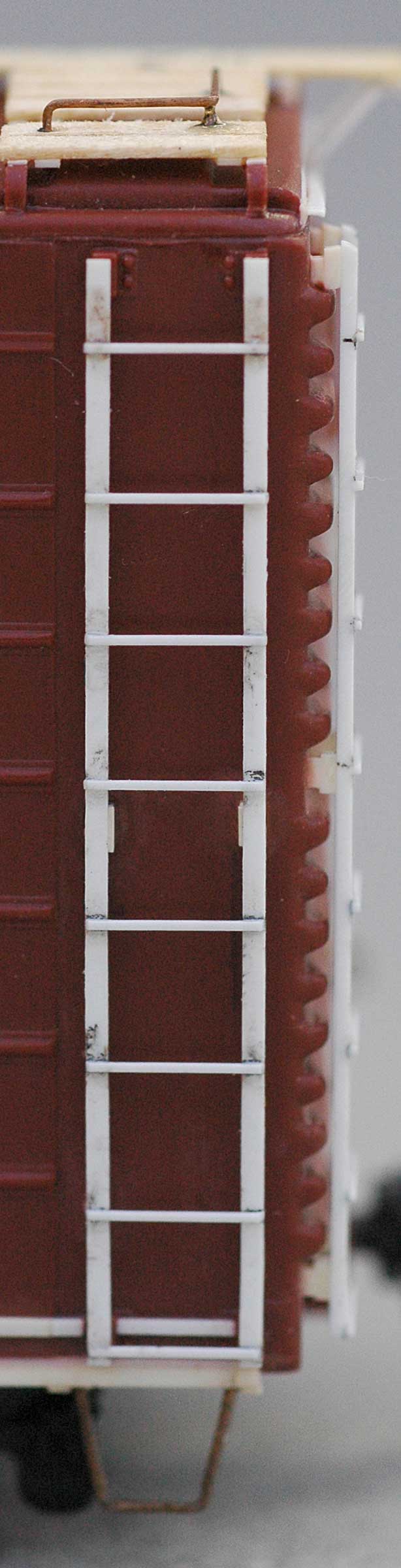
Scratchbuilt ladders upgrade a model on Bill's workbench.
Scratchbuilt ladders upgrade a model on Bill’s workbench.

Bill Welch steps in for a post on a recent technique that moved a project along. Click on any image here to review a larger size. Enjoy his story.

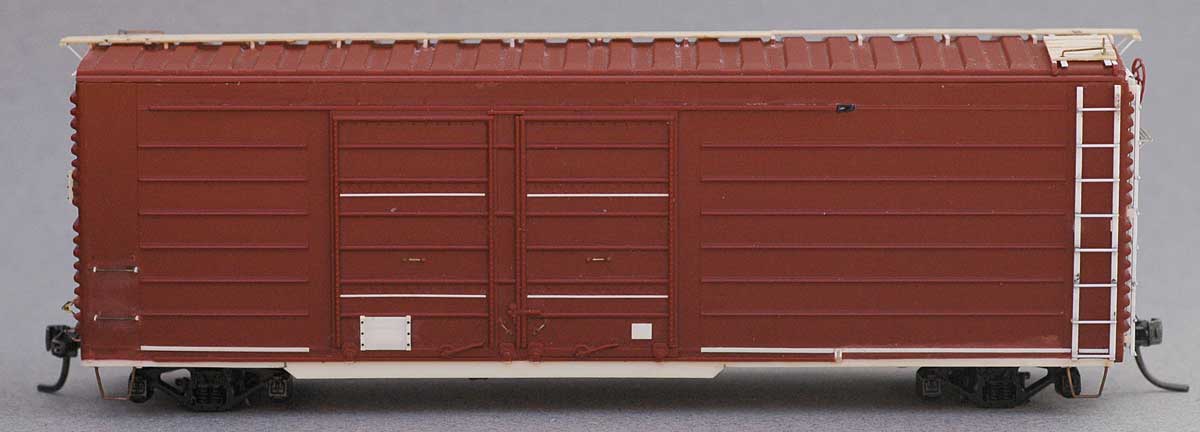
Because so many Steam Era House Cars were not of a standard design, or were ad hoc standard designs, the ladder rung spacing on Box, Auto, and Refrigerator cars would have varied meaning for a modeler that the commercial ladders often available to us are not exactly correct. Having become fanatical about the proper shape of Sill Steps, it was only a matter of time before I became obsessed about ladders. For models I spend a lot of time on I have been scratch-building ladders. Initially and luckily I could do this using an HO scale ruler but then I encountered a situation that required a different way to calculate the rung spacing and was wondering how to do this. I floated an email to members of my Modeling Posse and Pierre Oliver remembered a solution from his High School Drafting class and what he described worked perfectly and is ridiculously easy. Here goes.

ladder_web

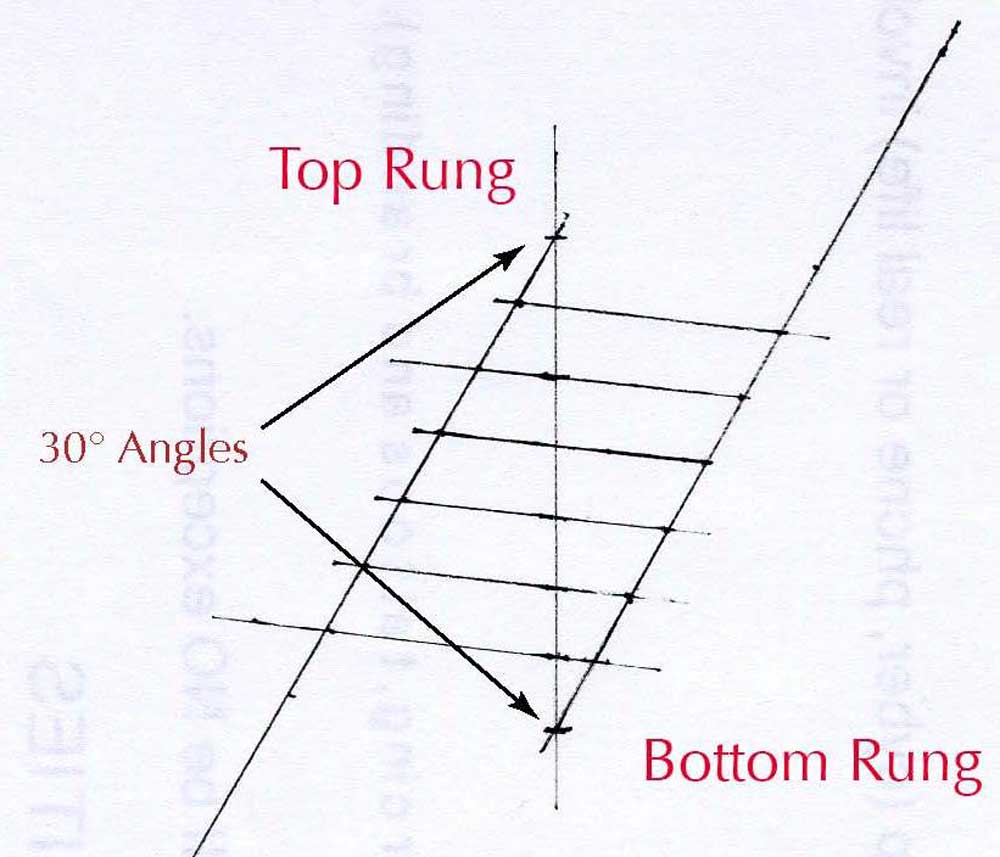
First off knowing where the location of the top and bottom ladder rungs and the distance between them is necessary and often there is a feature on the side of the car that helps us determine those two spots. From there we calculate the distance between them. Draw a straight line longer than you need and mark the line with two spots that correspond to the scale distance between the top and bottom ladder rungs. At each of those two spots draw a line at the same angle so that you have two parallel lines. I use 30° because it is easy but the angle really does no matter as long as both angles are the same. Okay, say you need an 8-rung ladder: Using either a compass or a ruler mark off 8 spaces on each parallel line. All marks must be equal distances. Then with a straight edge connect each set of dots or marks and like magic you have positions for each of the other six ladder rungs.

Rung spacing calculator.

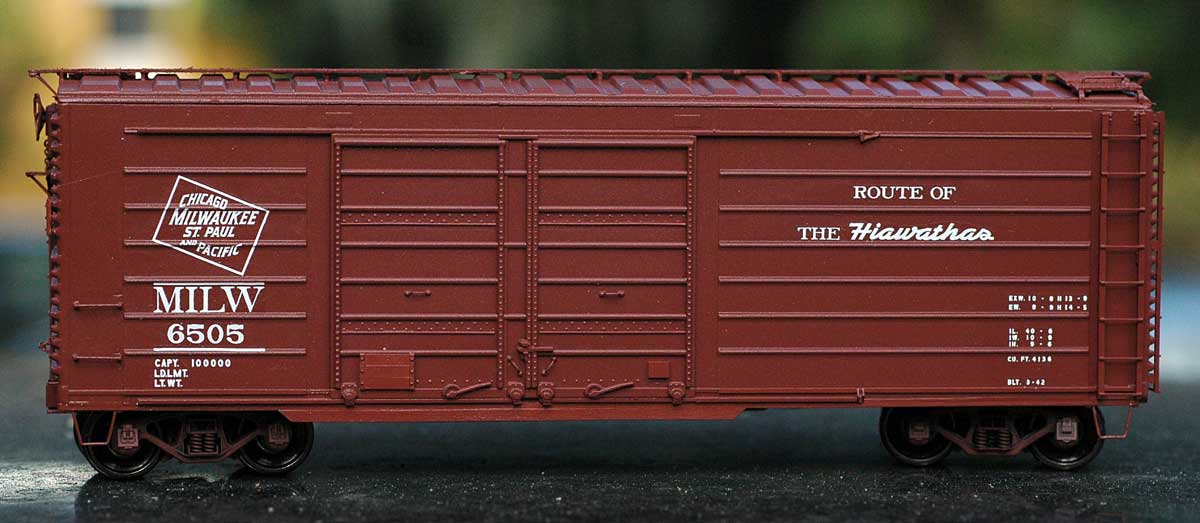
The task ended up Easy Peasey with the help of this drawing. The model isn’t quite done, but the ladders are complete and the build moves forward.

MILW_6505_web

Bill Welch

Fun Builds – 1

The latest build is ready for service!

I need to get into the habit of posting stuff. Recent events around the home have conspired to make me completely forget about the blog. A big distraction has been the garden while a smaller distraction has been this Nickel Plate Road mill gondola.

The prototype for the model.
The prototype for the model.  Joe Collias photograph from the collection of Frank Hodina.

I wanted something to build that wouldn’t take more than an evening and had this HO scale Chad Boas kit among the stash. This is a very nice, very simple kit composed of a resin underframe and sides, resin side braces, and laser cut wood deck and sides.

nkp_proto_diagram

Prototype info
The Nickel Plate installed 500 of these gondolas in 1923 from the Standard Steel Car Company in the 70000-70499 series. These were the first 48-foot long mill gondolas on the Nickel Plate. Many were converted to all steel cars in the late 1940s.

nkp_model_above

My build
I replaced the resin ends with plastic ends from the extra parts bin to get a thinner part. As this is an operating model where the brake gear can’t be seen, I did not install any brake system. much of the underframe space was packed with weight.

The fish belly side sills would obscure any view of the brake system, so why not fill the area with weight?

The model was ready to paint in about an hour! I don’t believe I have ever built a resin car that fast. I think it took maybe ten minutes to paint. The most time was spent waiting for the Scalecoat l paint to dry. The decals are scraps from used NKP sets and the weathering was done with Pan Pastels.

nkp_model_side

This gondola build was so much fun I think I’ll get a couple of Chad’s flat car kits! Check out his current model list.

Frank

Frank’s Distractions – 1

Like many of us, I am often attracted to some neat prototype that happened to catch my eye. It’s the “shiny new toy” syndrome, maybe, but let’s call it “Frank’s Distractions.” I’ll present some of those on occasion here on the blog. Some of these may end up as resin models but many will remain the shiny distractions they are.

Here’s a tank car that caught my interest. Click on any image here to review a larger size.

UOCX_10323_web

I found this car from a link posted on the Steam Era Freight Car YahooGroup. The tank car is what I’m calling a GATX Type 22, 10,000 gallon car. This car has a new full platform but they left the support for the old platform on the bands. The existing running boards are still wood while the new platform has an open grate. While it’s not very clear in the photo, it seems the car was reweighed in 1949.

UOCX_10345_web

UOCX 10345 is a photo of a new car that was built 8-22. This photo came from Richard Hendrickson. Richard and I had several conversations on what to call these earlier GATX tank cars. The earliest we’ve seen the TYPE designation on a GATX tank car is on UOCX 10484. We figured that working the GATX system backwards was logical. The first year that underframe design was built determined what TYPE it was. Check out the great info in this 1925 Railway Review article, “Improved Design of ARA Class IV Tank Car.”

gatx_type22_model_web
The 1943 ORER NMRA reprint lists UOCX 10000-10545 as 10,000 gallon cars. If this is a continuous series of cars, then it is the bulk of the 1943 UOCX fleet. A 1926 ORER lists UOCX 10000-10407 as 10,000 gallon cars. If this is a continuous number series, these tank cars would be two-thirds of the 1926 UOCX fleet. While these listings seem to be a continuous series of tank cars, these number series may not contain tank cars all built to the same design. private car listings can be squirrely like that.

The GATX Type 22 tank cars would be a “Someday” kit. There are just too many other items ahead of it right now. The model pictured above is a kitbash of an InterMountain tank. The only resin parts are the tank saddles and the running board/brake supports. If this GATX Type 22 goes into production, it will need to be a full resin kit due to the unavailability of InterMountain kits. The car is modeled from plans and measurements from a prototype car at the Monticello Railroad Museum. It’s GATX 7297 which was built 12-25.

gatx_type22_museum_web

I hope you have enjoyed this shiny new toy! It’s just one of many personal distractions.

Frank