All posts by RCWadmin

Layout Design with Nelson Moyer, part 7

Warning – Low Clearance Ahead

Nelson Moyer returns with build tips and techniques for duckunders. Click on any image here to review a larger size. Here’s Nelson with his latest tale.

Burlington Yard and Winfield Duckunder

Duckunders are to be avoided. That’s a cardinal rule of layout design. However, there are circumstances where duckunder alternatives are impossible, and my track plan presented me with no choice if I was going to model even a severely truncated facsimile of the CB&Q yard at Burlington, IA. By referring to the track plan in Part 1 of the series, it is immediately evident that the longest unbroken spaces in my basement are on the North and South outside walls, and those walls measure 16- and 18-feet, respectively. That’s not nearly long enough for Burlington, and the placement of those walls is totally wrong for a geographical approximation of the prototype.

Continue reading Layout Design with Nelson Moyer, part 7

Workbench Wednesday

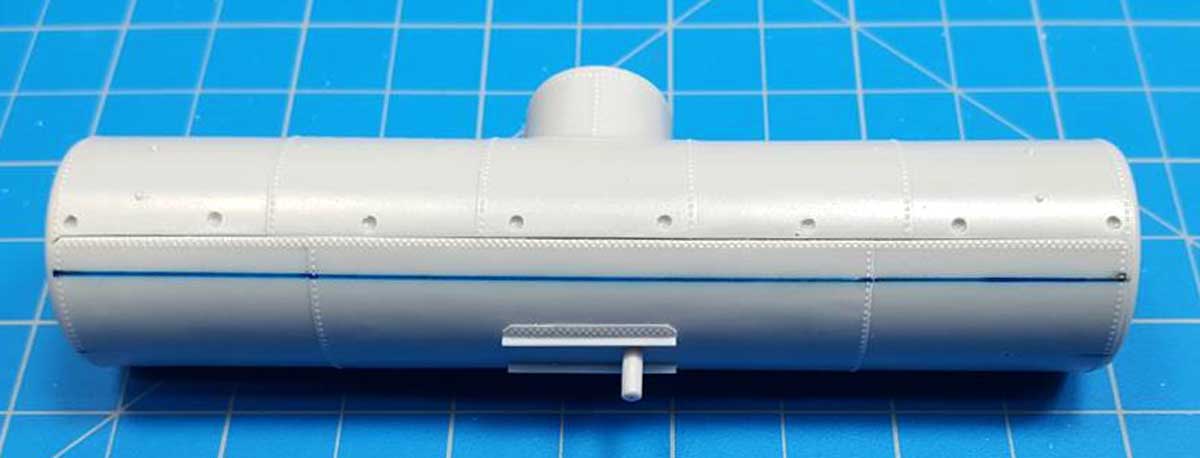
Shapeways printed HO scale Klasing brake wheels.

We kick off a new blog feature with this photo. Every now and then an image will show up on Wednesday for a look at something on our workbench. The photo could be for an upcoming kit, or model progress by one of our RCW minions, or something cool we found, like these Klasing brake wheels on Shapeways.

Prototype modeling vs. prototype-based freelancing

No. 45, the westbound KC Local, behind a USRA light Mikado, hustles into Metcalf, Ill., on Tony Koester’s HO tribute to the Nickel Plate Road’s St. Louis Division in 1954. The LCL boxcar behind the rider car looks like a blue-box kit, but its heritage is the last thing on the minds of the local’s crew as they plan their work in town and watch out for superior eastbound trains.

Tony Koester, editor of Kalmbach’s annual Model Railroad Planning and the Trains of Thought columnist and a contributing editor for Model Railroader, responded to an inquiry about his views of modeling a specific prototype vs. using one or more prototypes as the basis for a plausibly freelanced model railroad. Here’s Tony with more.

We keep trying to draw a line in the sand between prototype modeling and any form of freelancing. In my view, that’s both a waste of time and usually based upon faulty assumptions.

Let’s start with prototype modeling. As most of us who have done this to any extent have discovered, we are almost always faced with the choice of not getting much done, often owing to a lack of “complete” information, or the desire to make progress. “Analysis paralysis” is a very real aspect of prototype modeling. Many a grand plan has come to ruin on its shores.

Continue reading Prototype modeling vs. prototype-based freelancing

Uncoupling Devices

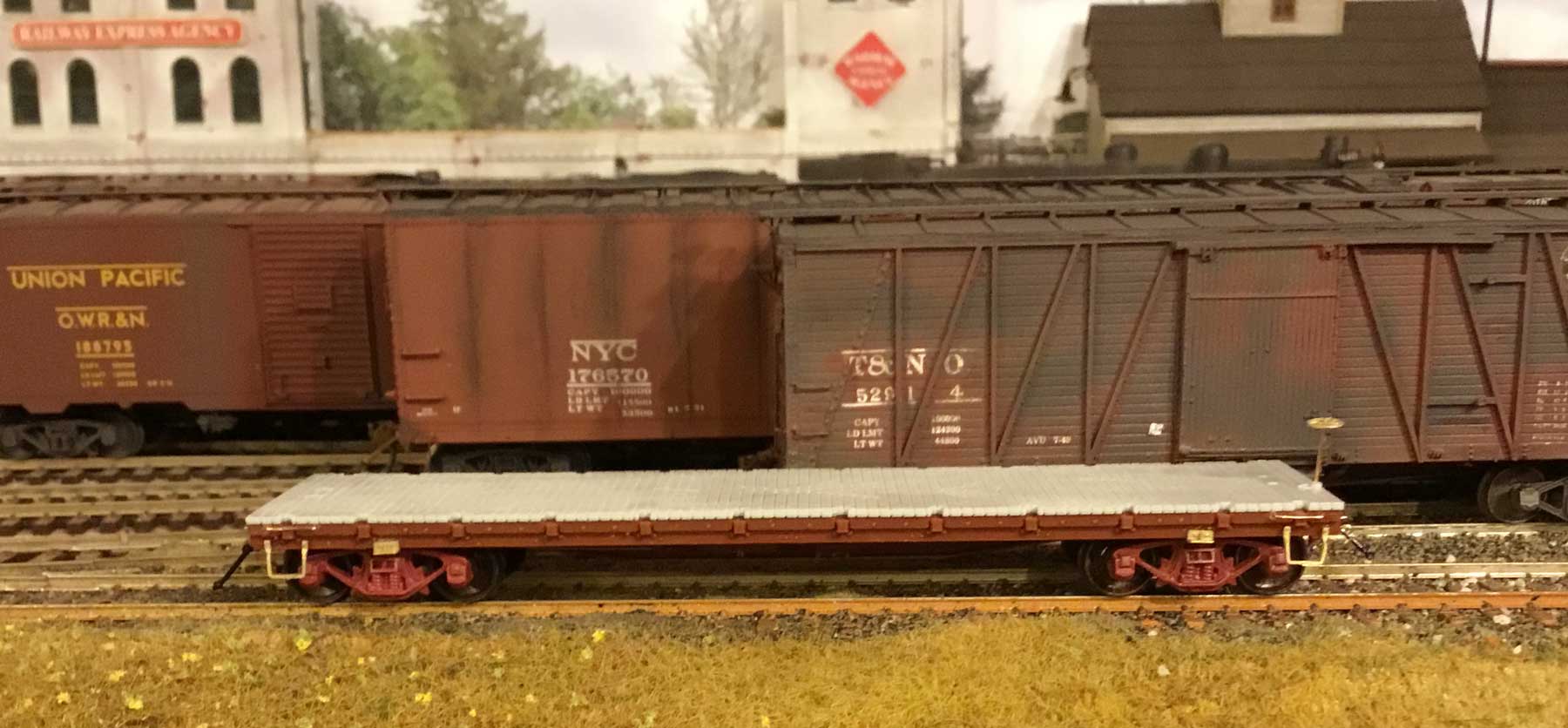
Adding uncoupling devices (cut levers) to plastic freight cars

Here’s a crop of an image showing an uncoupling device installed on a flat car. The original photo is from the John W. Barriger III National Railroad Library, a special collection of the St. Louis Mercantile Library.

Peter Hall recently sent details on adding a simple detail to box car ends. Here are Pete’s tips and techniques.

An increasing number of today’s excellent plastic injection-molded HO scale models come with uncoupling devices (cut levers), but we still have all those great models that need them. This article shows how to make simple attachment points and wire cut levers for those cars that need bottom-operated uncoupling devices.

Continue reading Uncoupling Devices